
Alfred North Whitehead
A mathematician who came to see the world as a process: everything becoming, nothing standing still.
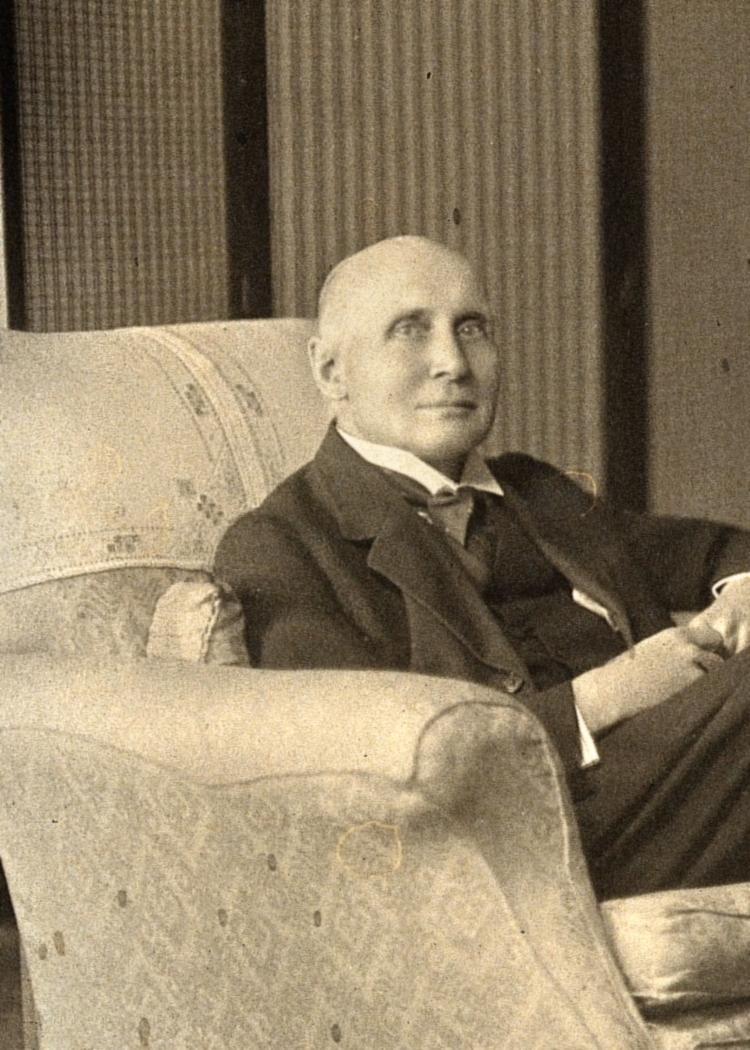
Who he was
Whitehead was born in Ramsgate, on the coast of Kent, in 1861. He spent the first half of his working life as a mathematician at Trinity College, Cambridge, where he and his former student Bertrand Russell wrote Principia Mathematica (1910–1913), an attempt to found all of mathematics on logic. He then taught in London, at University College and Imperial College.
In 1924, aged 63, he crossed the Atlantic to become a professor of philosophy at Harvard. There he wrote most of the books quoted here, in which he set out to describe a universe made not of things but of events, each one gathering up the past and adding something new. He died in Cambridge, Massachusetts, in 1947.
Each line in Embering links to a page below, where you can read it in the passage it comes from.
The Concept of Nature (1920)
Science and the Modern World (1925)
- The analysis of the obviousChapter 1
- Really new ideasChapter 3
- The religious visionChapter 12
- An adventure of the spiritChapter 12
- A clash of doctrinesChapter 12
- Religion and changeChapter 12
- The radiance of the sunsetChapter 13
- Great artChapter 13
- Other nations are godsendsChapter 13
Religion in the Making (1926)
- SolitarinessLecture 1
- The trappings of religionLecture 1
- The internal lifeLecture 1
- Forsaken, even by GodLecture 1
- Character and faithLecture 1
- The longing of the spiritLecture 3
- Solitariness in communityLecture 3
- All bound togetherLecture 3
- The kingdom of heavenLecture 4
- Every event on its finer sideLecture 4
- The one fundamental sacramentLecture 4
Process and Reality (1929)
- The flight of an aeroplanePart 1, Chapter 1
- The many become onePart 1, Chapter 2
- No one crosses the same river twicePart 1, Chapter 2
- Interesting, and truePart 3, Chapter 4
- The art of progressPart 5, Chapter 1
- The great companionPart 5, Chapter 2
- A tender carePart 5, Chapter 2
- The poet of the worldPart 5, Chapter 2
- The final antithesesPart 5, Chapter 2
The Aims of Education and Other Essays (1929)
- CultureChapter 1
- Holy groundChapter 1
- Duty and reverenceChapter 1
- The mind is never passiveChapter 1
- Your learningChapter 2
- WisdomChapter 3
- The sense of valueChapter 3
- Knowledge does not keepChapter 7
- Imagination and experienceChapter 7
The Function of Reason (1929)
Read more, free
- The Concept of Nature (1920)Project Gutenberg
- Science and the Modern World (1925)Project Gutenberg
- Religion in the Making (1926)Internet Archive
- Process and Reality (1929)Internet Archive
- The Aims of Education and Other Essays (1929)Internet Archive
- The Function of Reason (1929)Internet Archive
Every passage here is Whitehead's own English, taken from the first editions, all published in 1929 or earlier and in the public domain.
Close this page to return to your line in Embering.
Whitehead's lines arrive one a day in Embering, a quiet app for reading a single line slowly.
Get Embering